Hungary's BrownField Property Database!
COST-EFFECTIVE, ENVIRONMENTALLY FRIENDLY, SOCIALLY MORE ACCEPTABLE REAL ESTATE INVESTMENT OPPORTUNITIES
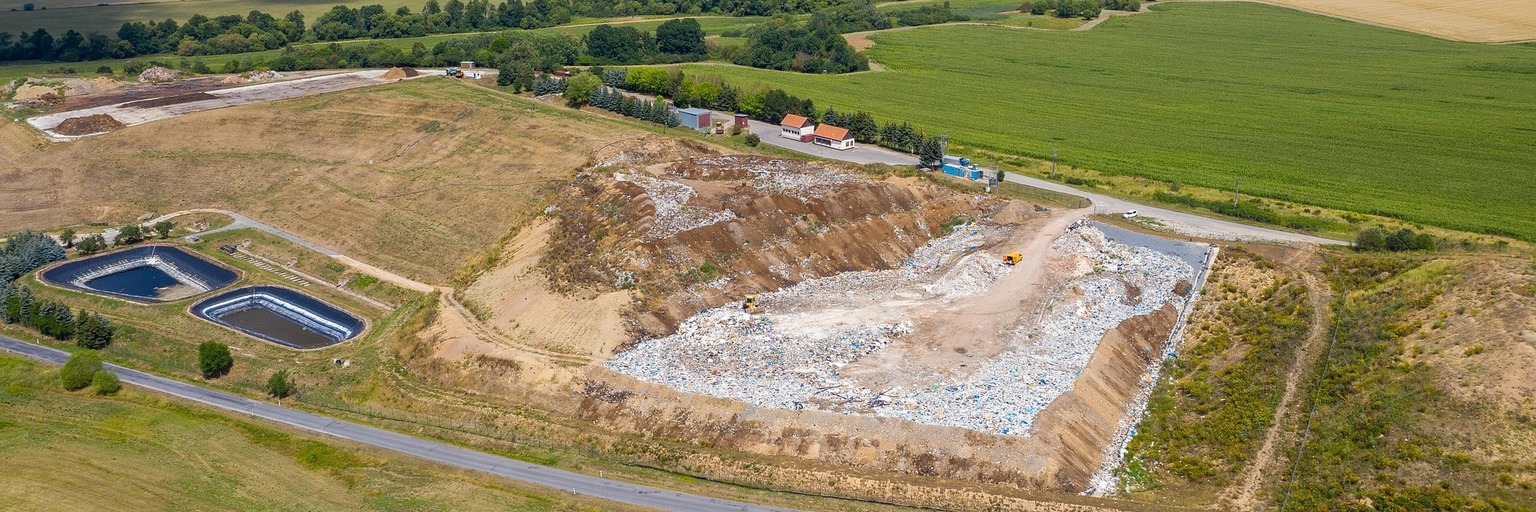
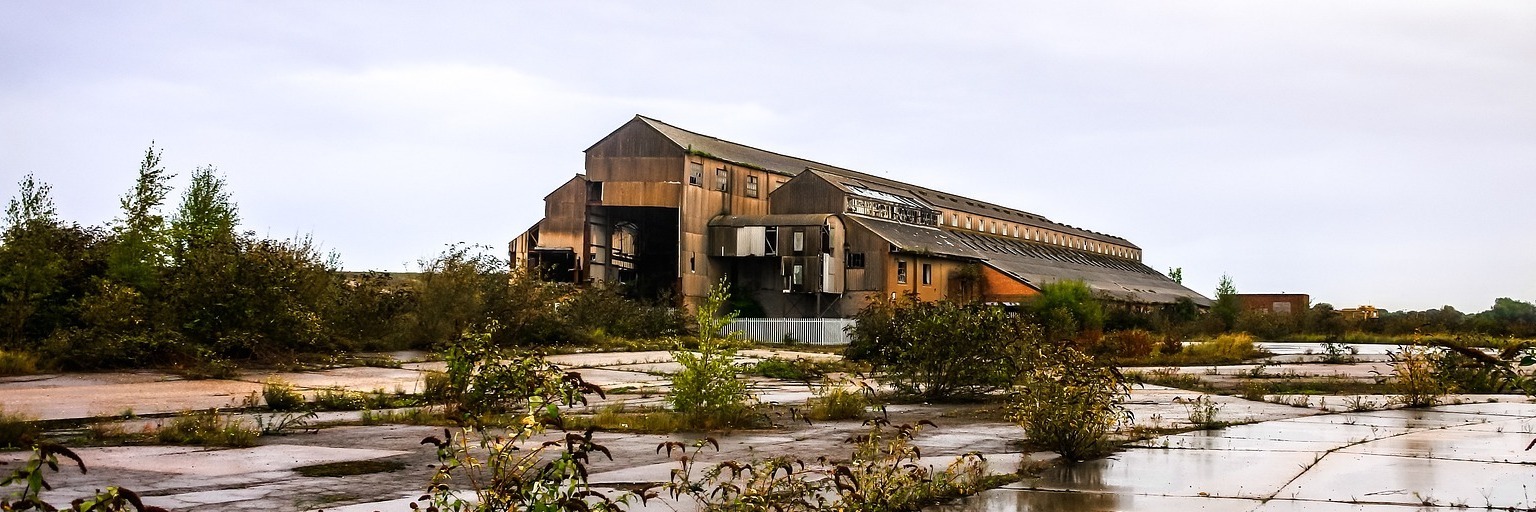
Our goal is for new investments to burden and endanger our natural and environmental values as little as possible. We consider it extremely important to facilitate the recycling of areas that have been degraded by previous industrial activities and have already been recultivated in their current state, thus reducing the land requirements of green field investments.
“Target property search” and data validation




- Our database contains more than 3,000 BrownField properties (evenly distributed across Hungary).
- Based on a detailed analysis of the specific needs laid down in the individual requests, we provide data about the most optimal properties for a given investment.
- The provided data contains accurate information on the current state of the site, its address (lot number), its owners, its history if available and any recultivation carried out.
- The data owner is responsible for the quality of the provided data, with a clear expectation of unambiguous identification of the properties and their owners.
- The data owner's obligation is limited to searching for “Target Property” and providing the relevant property identification data.
- Additional information history if other additional data are available, and any recultivation carried out.
BrownFields (pros/contras)
- Advantages and opportunities:
- Extremely favourable price.
- Cost-reducing factor: partially or fully decommissioned sites.
- Of the draft law on Hungarian architecture, Section 9 [Principle of the priority of brownfield areas].
- The sites are characterised by excellent infrastructure accessibility and a safe distance from residential areas.
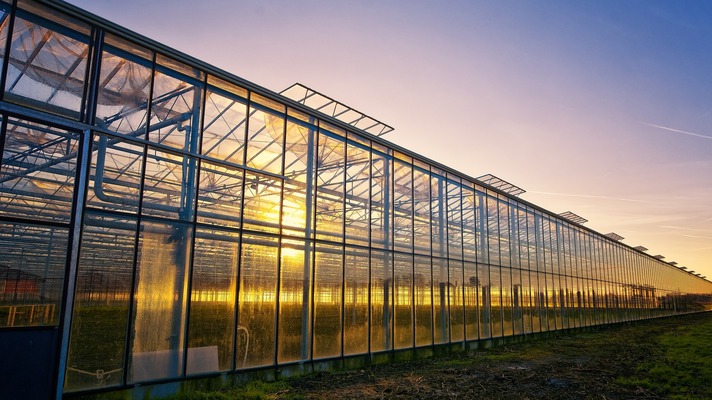
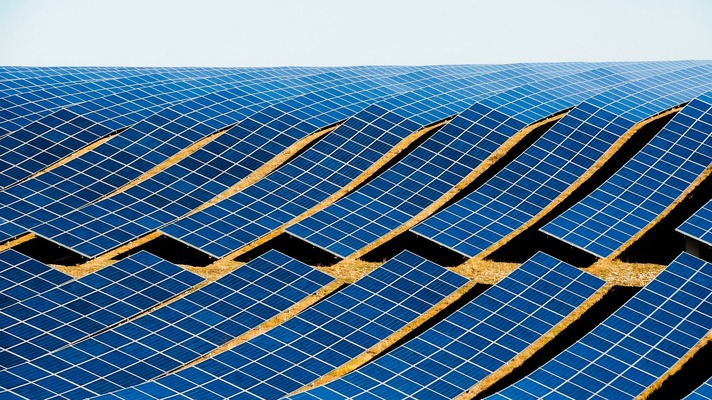
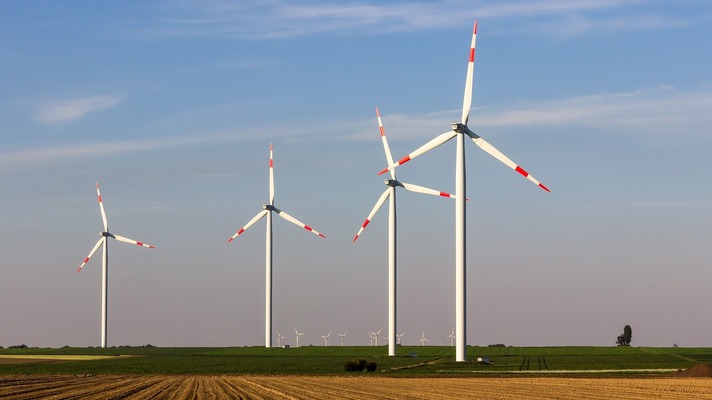
- The additional potential of the non-buildable parts of the property (e.g.: top cover and embankment wall of a landfill) can be economically exploited for solar energy production, which could result in significant energy independence for the investment (e.g.: energy intensive manufacturing, assembly or even greenhouse crop production activities).
- Enhances the credible environmental awareness of the investor through the use of environmentally friendly circular real estate, reducing the need for land withdrawals from cultivation (GreenField).
- Socially more acceptable and does not degrade the values to which the residents are accustomed.
- Creates value: turns landscape wounds into utilised and well-maintained areas, while also generating employment.
- Supportive municipal environment: an investor who creates value in a degraded environment is highly appreciated.
- The significant number of properties scattered across the country creates opportunities for new alternative, innovative transport, storage, telecommunication and energy networks, whose entrance to the market can be aided by lower property prices.
- the possibility of installing drone protection systems 448/2023. (X. 3.) Government decree according to the law on emergency measures for unmanned aircraft protection.
- Disadvantages and risk factors:
- Due to the limited capacity of the reclaimed land, partial or more regulated utilisation is possible.
- Engagement only allowed in activities which are compatible with the specific characteristics of the site, and that requires a high level of awareness in the use of the land.
- Management requirements (e.g.: leachate treatment, green area maintenance).
- Sampling obligations may apply (e.g.: surface water, groundwater sampling).
- Limited guarantee for recultivation, sampling results may trigger additional works.
- Undetected environmental damage and the legal and financial risks thereof.
- Difficulty in isolating the environmental impact caused by the activity resulting from the investment (inherited or caused environmental damage).
- Unforeseeable changes in legislation concerning the specific (reclaimed) environmental characteristics of the property may make the use of the property more difficult and may even create additional financial obligations.
Legal environment
On December 22, 2023, the 187th issue of the Hungarian Gazette officially promulgated the Act C of 2023 on Hungarian Architecture:
- Section 3 [List of core principles and their role]
- (1) During the protection and development of the built environment, the following shall be enforced:
- e) the principle of priority for brownfield areas,
- Section 8 [Requirements for areas designated for new urban development]
- (2) Provided that legislation does not prohibit the designation of an area for new urban development, areas for new development must be designated in the local zoning plan based on the following criteria:
- c) if within a 5 km radius of the planned new development area, and within the administrative territory of the given municipality, there is a brownfield area under Section 9 that can be made suitable for the given development, then an area for new urban development may only be designated in cases of overriding public interest.
- (3) During the designation of areas for new urban development, the following conditions must be met collectively, and the municipality must verify this by a separate municipal resolution—which shall form an annex to the local zoning plan:
- d) that within the areas already designated for development in the municipality, there is no vacant land unaffected by construction activity or brownfield area that matches the designated function and use of the proposed new development,
- (2) Provided that legislation does not prohibit the designation of an area for new urban development, areas for new development must be designated in the local zoning plan based on the following criteria:
- Section 9 [The principle of primacy of brownfield areas]
- (1) The minister responsible for urban development and spatial planning shall maintain a registry of brownfield areas in a manner that ensures municipal governments and urban planners can access up-to-date data on brownfield properties located within the area affected by urban planning and its 5 km radius through data provisioning.
-
(2) The registry under subsection (1) shall contain the following data:
- a) the natural personal identification data, residential address, and tax identification number of the owner of the real estate qualifying as a brownfield area—or the tax number in the case of a corporate owner—, and
- b) in accordance with the provisions of a government decree, the national boundaries of brownfield areas, as well as the data of real estate qualifying as brownfield areas and related regulatory decisions, excluding any personal data.
- (3) The national boundary delimitation under point b) of subsection (2) shall be considered public, legally authentic records.
- (4) The utilization of brownfield areas—provided that the investment can be realized on a brownfield area based on the scale of the given development—must be prioritized over greenfield areas.
- (5) The utilization of brownfield areas shall be promoted by:
- a) granting statutory tax exemptions combined with environmental remediation, and
- b) defining specific spatial planning and construction requirements.
- (6) Brownfield areas must be utilized with functions that align with urban development goals and the urban structure, ensuring the provision of technical and green infrastructure.
- Section 16 [Definitions]
For the purposes of this Act:- 4. brownfield area: a parcel of land or a collection of land parcels—excluding agricultural and forestry areas, as well as national defense and military areas under the asset management of the ministry led by the minister responsible for national defense—which, primarily following its use for industrial, commercial, transport, national defense, or town-center purposes, has become abandoned, underutilized, or dilapidated, is typically affected by environmental contamination, but can be converted into a value-enhanced, developable area through environmental and technical intervention or nature-based solutions, including rust belt action areas;
- 66. area undergoing significant redevelopment: a brownfield area, as well as an unused or underutilized area designated for urban development, which, in harmony with local building regulations or following the re-zoning of the area, can be converted into a value-enhanced area that fits the established settlement structure and townscape through environmental and technical intervention;
-
113.
rust belt action area: a brownfield area designated by a government decree, supplied or sustainably suppliable with transport, utility, and institutional infrastructure, suitable for residential and other purposes, provided that:
- a) immediate rust belt action area: a rust belt action area where preparatory works necessary to launch the intended construction investments are not required, or are already underway or can be completed within a short period, and in respect of which a permitted construction investment or an investment under preparation is planned by the owners or developers, and the introduction of related incentives can result in a rapid commencement of construction;
- b) medium- and long-term rust belt action area: a rust belt action area in respect of which complex preparatory works, such as environmental remediation, demolition, utility alignment, infrastructure development, ownership resolution, land subdivision, and spatial planning tasks are required, and the availability of which as a developable area requires government coordination, significant financial expenditure, and a preparatory period of several years;
- Section 17 [General duties of the State]
- (2) The priority tasks of the State shall include:
- a) the further protection of areas not designated for urban development and the promotion of the utilization of brownfield areas,
- (2) The priority tasks of the State shall include:
- Section 19 [Competence for establishing specific regulations]
The Government—after consulting the affected property owner and the local municipality of the territory where the affected property is located—may:- b) establish specific spatial planning and construction regulations for brownfield areas in order to promote their utilization combined with environmental remediation and statutory tax exemptions, and may define special regulatory procedural rules in connection with construction activities.
- Section 75 [Requirements for municipal plans]
- (7) If there is a brownfield area within the administrative territory of the municipal (in the capital, district) government, it may delimit the brownfield area in its municipal plan, and during the amendment of the urban development plan, it may define the development and recycling opportunities of brownfield areas.
- Section 218 [The construction-economic registry]
- (6) The National Construction Registration System (NÉNY) connects electronically to the following registries, thereby ensuring the query of non-personal data content specified in a government decree and personal data content specified in this Act, as follows:
- f) data from the registry of construction investments of overriding public interest, major state construction investments, public procurement construction investments, and brownfield construction investments,
- (6) The National Construction Registration System (NÉNY) connects electronically to the following registries, thereby ensuring the query of non-personal data content specified in a government decree and personal data content specified in this Act, as follows:
- Section 225 [Authorizations for decree-making]
- (1) Authorization is granted to the Government to determine by decree:
- 79. the dataset—excluding personal data—of the national brownfield cadaster and the rules for its utilization,
- (1) Authorization is granted to the Government to determine by decree:
- Section 229 [Transitional provisions for brownfield areas and urban planning]
- (1) The registry of brownfield areas under Section 9(1) must be digitally established by the minister responsible for urban development and spatial planning by January 1, 2026. Until the establishment of the registry, the local municipality shall issue its certification regarding the brownfield area under Section 8(3) independently of the national brownfield cadaster, based on the definition of a brownfield area under point 4 of Section 16.
- (2) For the purpose of establishing and maintaining the registry under subsection (1), and for delimiting brownfield areas, local municipalities, state chief architects, and property owners are obliged to provide data—excluding personal data—concerning the environmental state of their administrative territory (for municipalities), area of competence (for state chief architects), or owned properties (for property owners) to the minister responsible for urban development and spatial planning free of charge, within 30 days of the request. For the purpose of delimiting brownfield areas and their subsequent exploitability, the affected authorities are obliged to provide—within 30 days of the request—the data, excluding personal data, of regulatory decisions affecting real estate that meets the definition of a brownfield area.
Díjkategóriák és szavatosság:
| Fee categories | Lower area limit [gross ha] |
Upper area limit [gross ha] |
Fee of target property search [net EUR/m²] |
|---|---|---|---|
| I. | < 0,5 | ||
| II. | 0,5 ≤ | < 1 | |
| III. | 1 ≤ | < 2 | |
| IV. | 2 ≤ | < 3 | |
| V. | 3 ≤ | < 6 | |
| VI. | 6 ≤ | < 20 | |
| VII. | 20 ≤ |
[1 ha = 10.000 m²]
- If requested, the data owner guarantees that after paying the +50% exclusivity fee, the property data provided to the Customer will not be transferred to a third party for 180 days, in which case they may not resell them within 180 days (they will record them in their records as exclusive data provided to the Customer).
- The fee received as compensation for the “Information Service” does not provide any guarantee of the purchase of the real estate, or the permissibility of the planned activity, nor does it impose any obligation on the data owner to carry out coordination activity in this respect.
- Be part of our BrownField database:
- As a first step, check if your property is listed in the largest Brown Field database of Hungary.
- Send us your property's lot number, size (m2), gross sales price (€) and ownership details, then we will check whether it is already listed in our database.
- If not, we will add it to our database without any obligation for and commission from the owners.
- When adding it to our database, we will ask for further information on the property's history, and any recultivation work carried out. After that we will update the database and inform the data submitter about the successful completion.
- Once the property is included in the database, it will be offered for sale in case it matches any "Target property" search.
Request for quote and contact
Attention! The services of barnamezo.eu are exclusively available to business entities, sole traders, and institutions (B2B sector). By submitting your data and requesting an offer, you declare that you are not acting as a consumer (private individual). The use of our services is governed by our Terms and Conditions (T&C) and Privacy Policy.
Do not hesitate to request a quote using the form below, we will get back to you as soon as possible.